
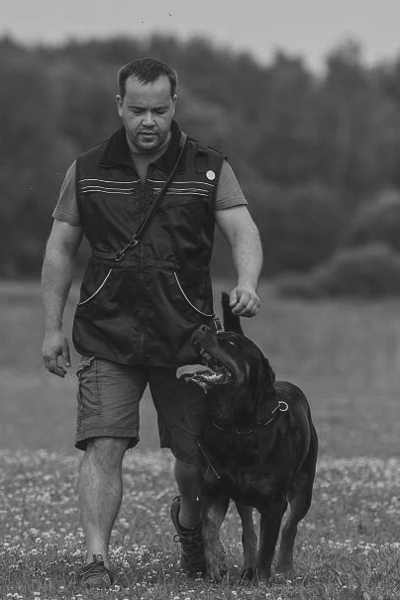
What Happens Inside Your Dog’s Body During the First 24 Hours After Intense Exercise
Contents
- Introduction
- The First Minutes After Exercise
- Why Your Dog Still Wants to Work
- The Silent Work of Recovery
- What Does the Body Need to Recover?
- Why Some Amino Acids Matter More Than Others
- Recovery Is More Than Muscle
- What Owners Can Do After Training
- From Science to Practice
- Key Takeaways
Your Dog Looks Fully Recovered… But Is It Really?
What Happens Inside Your Dog’s Body During the First 24 Hours After Intense Exercise
Introduction
Your dog finishes a demanding training session or competition. Ten minutes later, the tail is wagging again, the eyes are bright, and if given the chance, most dogs would happily run another round.
To us, it looks like recovery is complete.
But inside the body, the real work is only beginning.
During the next several hours, muscles begin repairing microscopic damage, energy stores start to replenish, hormones return to balance, and the immune system becomes actively involved in the recovery process. Although these changes are invisible, they play a crucial role in determining how well a dog performs tomorrow, next week, and throughout its sporting career.
Understanding what happens during the first 24 hours after exercise helps owners make better decisions about rest, hydration, nutrition and training schedules. Recovery is not simply the absence of fatigue – it is an active biological process that deserves as much attention as the training itself.
The First Minutes After Exercise
The moment exercise ends, your dog’s body changes priorities.
Only a few minutes ago, every system was focused on performance. The heart was pumping at maximum efficiency, breathing accelerated to meet the muscles’ demand for oxygen, and thousands of muscle fibers were contracting with tremendous force. Now, the goal is no longer performanceя – it is recovery.
Despite appearances, this transition is anything but passive.
Heart rate remains elevated while oxygen continues to reach working muscles. Breathing gradually slows, but it still serves an important purpose: restoring normal blood gases and helping dissipate excess body heat. Panting, increased blood circulation and fluid shifts all work together to return body temperature toward normal.
At the same time, muscle tissue begins repairing countless microscopic disruptions created during exercise. These tiny structural changes are a completely normal consequence of physical work. In fact, they are one of the reasons training leads to stronger muscles over time. However, repair requires energy, water and the right nutrients.
Another important process is already underway: the body starts rebuilding depleted energy stores. During intense work, muscles consume large amounts of glycogen—their primary fuel source. Replenishing these reserves takes hours, not minutes.
Although none of these processes are visible from the outside, they determine how well your dog will recover before the next training session.
PETLINE INSIGHT
Recovery begins the moment exercise ends—not when your dog starts looking tired.
Why Your Dog Still Wants to Work
One of the most common mistakes dog owners make is assuming that enthusiasm is a reliable sign of recovery.
It isn’t.
Working and sporting dogs have been selectively bred for generations to remain focused despite physical fatigue. Whether it’s an IGP dog holding a powerful grip, an agility dog attacking the next obstacle, a hunting dog following scent through difficult terrain, or a search and rescue dog working under extreme conditions, their willingness to continue often exceeds their body’s current ability to recover.
Every experienced handler has seen this moment.
Training is over.
The sleeve is back in the bag.
The last jump has been cleared.
The decoy has left the field.
Yet the dog is still searching for the ball, watching the handler’s hands, pulling on the leash, hoping that one more exercise is about to begin.
That desire is not a sign that recovery has finished.
It is a reflection of genetics, training, motivation and trust.
This is one of the greatest qualities of a working dog—but it can also become one of the greatest challenges for the handler.
Good handlers do not judge recovery by excitement.
They judge it by understanding what the body still needs, even when the dog appears ready for more.
Knowing when to stop is not a sign of weakness.
It is one of the foundations of long-term performance, health and longevity.
PETLINE INSIGHT
A dog’s enthusiasm is not a reliable indicator of recovery. Motivation and physiological recovery are not the same thing.
The Silent Work of Recovery
Once exercise is over, the most important part of training begins—and it happens where we cannot see it.
Inside the muscles, thousands of microscopic repair processes are already underway. Tiny disruptions in muscle fibers trigger a carefully coordinated biological response. Damaged proteins are broken down, new proteins begin to form, and specialized cells start rebuilding tissue so that it can better withstand the next training session.
This is how the body adapts.
Training itself does not make a dog stronger.
Recovery does.
The same principle applies far beyond the muscles.
Energy reserves depleted during exercise must be restored. The immune system becomes temporarily more active, helping remove damaged cells and supporting tissue repair. Hormonal signals shift from maximizing performance to promoting regeneration. Even the digestive system plays an important role by absorbing the nutrients needed to support these processes.
All of this requires time.
It also requires the right building materials.
No amount of motivation, experience or genetic potential can replace the biological processes that take place after exercise.
The quality of recovery often determines the quality of the next performance.
Dogs that recover efficiently are more likely to maintain muscle mass, adapt to training, reduce accumulated fatigue and remain healthy throughout long sporting careers.
This is why experienced handlers often say that recovery begins the moment training ends.
In reality, they are absolutely right.
PETLINE INSIGHT
Training is the stimulus. Recovery is where adaptation takes place.
What Does the Body Need to Recover?
If recovery is an active biological process, an obvious question follows:
What does the body actually need to recover successfully?
The answer begins with three fundamental requirements:
time, energy and building materials.
Without sufficient time, tissues cannot complete the complex processes of repair and adaptation. Without energy, cells cannot carry out the countless biochemical reactions required for recovery. And without the necessary building materials, damaged structures cannot be repaired or replaced.
This is where nutrition becomes critically important.
Protein is often associated with muscle development and recovery, and for good reason. It provides the raw material from which the body synthesizes its own proteins, enzymes, hormones, antibodies and many other biologically important molecules.
However, the body cannot use most dietary proteins in their original form.
During digestion, proteins are broken down into amino acids and small peptides. These are absorbed through the intestinal wall, enter the bloodstream and become available to cells throughout the body.
Once absorbed, amino acids are distributed according to the body’s current physiological needs. Some are used to synthesize new muscle proteins, others support the production of enzymes, hormones or antibodies, while many participate in multiple metabolic pathways simultaneously.
Dietary protein is therefore not the final building material itself.
Rather, it serves as the source of amino acids from which the body constructs the proteins it needs.
For recovery to proceed efficiently, the body must have access to an adequate supply of all required amino acids—particularly the essential amino acids that cannot be synthesized in sufficient quantities and therefore must be obtained from the diet.
Nutrition, therefore, is not simply about providing calories or increasing protein intake.
It is about supplying the body with the nutrients required to support recovery, adaptation and long-term health.
PETLINE INSIGHT
Dietary proteins become useful only after digestion. The body rebuilds its own tissues using the amino acids absorbed from food.
Why Some Amino Acids Matter More Than Others
By now, one thing has become clear.
Recovery depends on having the right building materials available at the right time.
This naturally leads to another important question:
Are all amino acids equally important?
The answer is no.
Amino acids are generally divided into two groups: essential and non-essential.
The terminology, however, is often misunderstood.
Non-essential does not mean unnecessary or less important. It simply means that, under normal physiological conditions, a dog’s body can synthesize these amino acids from other compounds.
Essential amino acids are different.
They cannot be synthesized in sufficient quantities to meet the body’s needs and therefore must be supplied through the diet.
If the availability of even one essential amino acid becomes insufficient, the body’s ability to synthesize new proteins is reduced, regardless of how much of the other amino acids is available.
For this reason, recovery depends not only on the total amount of dietary protein, but also on whether all essential amino acids are available in adequate amounts.
Different tissues have different metabolic priorities.
Skeletal muscle requires amino acids to repair contractile proteins damaged during exercise.
Connective tissue requires them for collagen synthesis.
The immune system relies on amino acids to support immune cell function and antibody production.
Cells lining the intestinal tract also require specific amino acids to maintain the integrity of the intestinal barrier.
Recovery is therefore not a single biological event.
It is a coordinated process involving multiple tissues and organ systems, all relying on the same pool of absorbed amino acids.
For this reason, recovery nutrition is about far more than increasing protein intake alone.
It is about providing a complete and balanced supply of amino acids capable of supporting every stage of the recovery process.
PETLINE INSIGHT
Recovery depends on the availability of all essential amino acids – not simply on the total amount of protein consumed.
Recovery Is More Than Muscle
When people think about recovery after exercise, they usually think about muscles.
That is understandable.
Muscles generate movement, consume large amounts of energy and experience microscopic structural changes during intense physical activity. Their recovery is essential for maintaining strength, endurance and performance.
But muscles tell only part of the story.
Every demanding training session affects the entire body.
While muscle tissue begins repairing itself, the immune system is also at work. Exercise temporarily increases the activity of immune cells responsible for removing damaged tissue and supporting the early stages of repair. This response is a normal and necessary part of adaptation, but like every biological process, it requires energy and nutrients.
Connective tissues are recovering as well.
Tendons and ligaments are continuously exposed to mechanical stress during running, jumping, turning and sudden acceleration. Although they adapt more slowly than muscle tissue, maintaining their integrity is equally important for long-term soundness and athletic performance.
The digestive system also plays a central role.
Recovery depends on the efficient digestion and absorption of nutrients. Amino acids, minerals, vitamins and other dietary components must first be processed by the gastrointestinal tract before they become available to the rest of the body. A healthy digestive system is therefore an essential part of effective recovery.
At the same time, the body is restoring normal physiological balance.
Hormonal signals gradually shift from supporting physical performance toward tissue repair, energy restoration and metabolic recovery. Countless enzymes continue regulating the biochemical reactions that allow damaged structures to be rebuilt and normal function to be restored.
Recovery is therefore best understood as a coordinated whole-body process rather than the repair of a single tissue.
Every system contributes.
Every system depends on the others.
The better these systems work together, the more effectively the body adapts to training and prepares for the next challenge.
PETLINE INSIGHT
Successful recovery is never the result of a single organ or a single nutrient. It is the coordinated work of the entire body.
What Owners Can Do After Training
Understanding recovery is useful only if it changes what we do in practice.
The first step is simple: do not judge recovery only by behaviour.
A dog may look bright, motivated and ready to continue, while its muscles, energy reserves and metabolic systems are still returning to balance. For working and sporting dogs, this is especially important because drive often hides fatigue.
After demanding exercise, the dog should be given time to cool down gradually. A calm walk, access to fresh water and a quiet recovery period are often more useful than abruptly stopping the session and immediately returning the dog to a crate or car.
Hydration also matters.
Water supports circulation, temperature regulation, digestion and nutrient transport. Even mild fluid loss can affect how efficiently the body restores balance after exercise. This does not mean forcing the dog to drink large amounts at once, but fresh water should always be available after work.
The next priority is rest.
Recovery is not laziness. It is the period during which the body repairs tissues, restores energy reserves and adapts to the training stimulus. Repeating hard sessions too frequently, without enough time between them, increases the risk of accumulated fatigue.
Nutrition should support this process.
After exercise, the body needs access to digestible nutrients that help restore energy balance and provide amino acids for tissue repair. The goal is not to overload the dog with food immediately after training, but to ensure that the overall diet provides sufficient quality protein, essential amino acids, minerals, vitamins and fatty acids to support recovery over time.
For owners, the practical message is clear.
Good recovery is not one action.
It is a routine.
A routine built from sensible training decisions, hydration, rest, high-quality nutrition and the ability to stop before fatigue becomes excessive.
PETLINE INSIGHT
Recovery is not what happens after training is forgotten. It is part of the training plan itself.
From Science to Practice
Everything discussed in this article is based on well-established principles of canine physiology, nutrition and exercise recovery.
At Petline, these same principles became the foundation for the development of AminoX.
Rather than creating another general nutritional supplement, our goal was to formulate a comprehensive amino acid complex designed to support the physiological processes involved in recovery, adaptation and long-term performance.
AminoX was developed with one simple idea in mind:
Support the dog’s own biology, rather than trying to replace it.
Nutrition cannot substitute for proper training.
It cannot replace rest.
It cannot compensate for poor conditioning.
But when training, recovery and nutrition work together, each supports the effectiveness of the others.
That philosophy continues to guide every product we develop.
Because our objective has never been simply to sell nutritional supplements.
Our objective is to help owners better understand their dogs—and to support their health through science-based nutrition.
PETLINE INSIGHT
The best nutritional support works with biology, not against it.
Key Takeaways
Recovery begins the moment exercise ends.
A dog’s motivation is not a reliable indicator of physiological recovery.
Muscles are only one part of the recovery process.
Dietary proteins must first be digested into amino acids before they can be used by the body.
Recovery depends on the availability of all essential amino acids, not simply on total protein intake.
Rest, hydration, nutrition and appropriate training work together as one recovery system.
Understanding recovery is one of the best ways to protect your dog’s long-term health and performance.